J’accuse: smart glasses are peeping Toms that violate privacy, ignore confidentiality, and undermine privilege. How should businesses protect against them?
Background
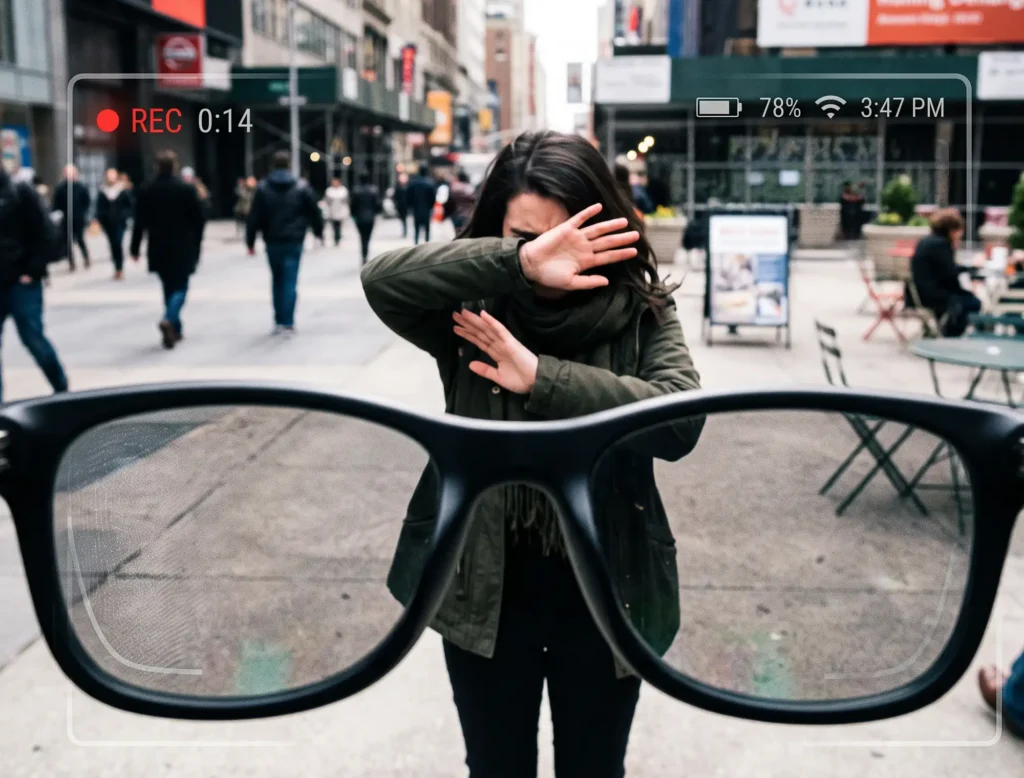
“Smart glasses” are accessories with internet-connected cameras and microphones. They can continuously capture conversations, computer screens, whiteboards, product designs, customer information, passwords, and confidential meetings.
Unlike a smartphone, they do not need to be pulled from a pocket and pointed at something. They can record while their wearer walks through an office, attends a management meeting, or speaks with a customer.
More importantly: the information they capture may not remain on the device.
The Meta Allegations
Investigations into Meta’s smart glasses reported that users’ recordings, photographs, and voice interactions were uploaded to Meta’s cloud infrastructure and routed to third-party data-labeling workers in Kenya. Those workers allegedly watched, listened to, and labeled the files to improve Meta’s AI systems.
The subsequent consolidated class-action complaint alleges that victims were recorded while undressing, using bathrooms, engaging in sexual activity, and exposing private banking information — all without their knowledge or consent. While not finally adjudicated, the allegations illustrate a risk we should already understand: a wearable device may transmit whatever it sees and hears through systems the business does not control.
Our Problem
Businesses generally know how company information leaves the building. To control against unauthorized release, they monitor email, restrict removable drives, require passwords, and control cloud storage.
Smart glasses may bypass those protections.
An employee could inadvertently record a confidential meeting; a contractor or visitor could capture restricted information. This data could be transmitted externally without the company’s knowledge or control. Data may then be retained by a third party, processed through a vendor’s cloud environment, or used to train an AI model, potentially without the visibility or controls the company would require for any other transfer of sensitive data.
These recordings may implicate consent laws, employee privacy requirements, and contractual confidentiality obligations. A single recording could expose customer information, trade secrets, or personal data.
How to be Smarter than Smart Glasses
Businesses should treat AI-enabled smart glasses and other wearables as what they are: personal recording devices.
That categorization doesn’t necessarily require an absolute ban. Depending on a business’s risk tolerance, consider:
- restricting them in sensitive areas and confidential meetings,
- requiring disclosure when they are present, and
- updating privacy and information-security policies to include their existence.
Policies and exceptions should address what the device may capture, where the information goes (or may go), and whether it will be retained or used for AI training.
Need help with this topic? We are happy to further discuss, develop appropriate policies, and/or provide training to employees. Contact us today!
Special thanks to Morgan McDaniel for her assistance with this article.